Revolutionizing Violin Design: MIT's Physics-Based Virtual Instrument
For centuries, violin makers—known as luthiers—have relied on intuition and hands-on trial to craft instruments with perfect tone. Now, MIT engineers have created a groundbreaking computer simulation called the virtual violin, which models the exact physics of the instrument. Unlike standard audio plugins that simply replay recorded sounds, this tool reproduces the sound of a plucked string from first principles. Published in npj Acoustics, the research aims to demystify violin acoustics and give luthiers a powerful new design resource.
What is MIT's virtual violin?
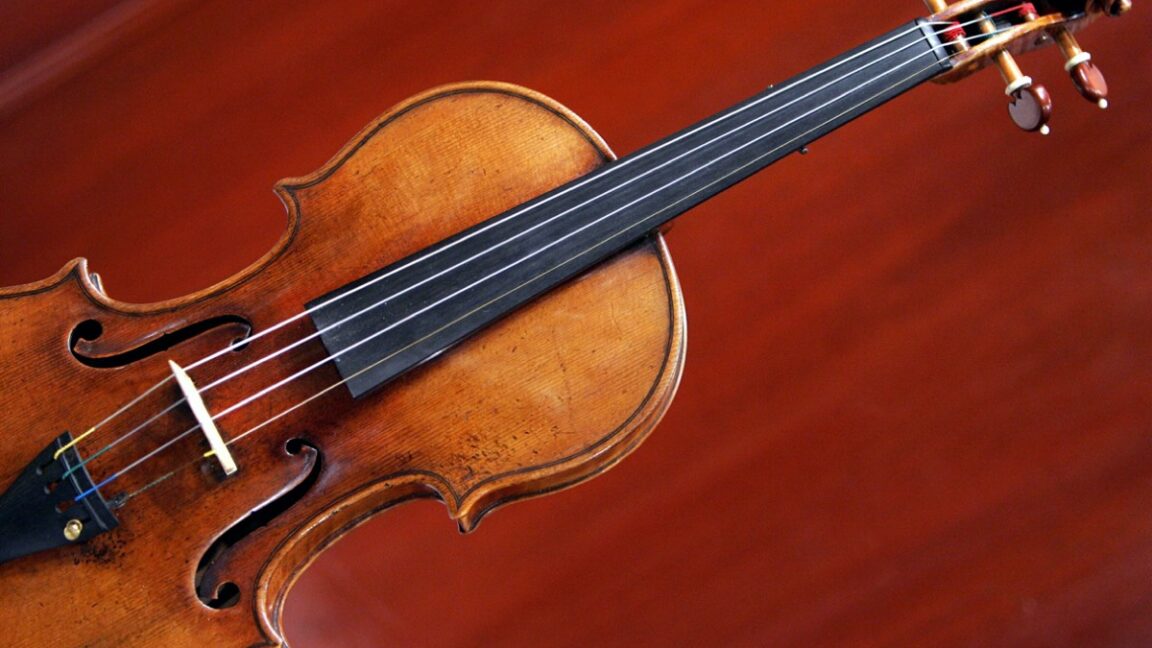
MIT's virtual violin is a computer simulation that mathematically captures every physical detail of a real violin—from wood density and arching to string tension and air resonance. It uses the fundamental laws of acoustics to generate the sound of a plucked string in real time. This is not a sample library that averages many recordings; it rebuilds the sound from scratch based on the instrument's geometry and material properties. The team, led by Professor Nicholas Makris, hopes this tool will help luthiers test new designs before building them, saving time and materials.
How does it differ from existing violin software?
Most violin simulation software today works by sampling—recording thousands of real notes and playing them back when triggered. This gives a realistic average sound but misses the subtle interplay between bow, string, and body. MIT’s virtual violin uses a physics-based approach called computational acoustics, which solves equations that govern how vibrations travel through wood and air. This means it can accurately mimic how every microscopic change—like a slightly thicker top plate or a different f-hole shape—alters the tone. As co-author Nicholas Makris says, the goal is not to replace the artisan’s magic but to understand the underlying science.
Why is violin acoustics so complex?
A violin is a marvel of acoustic engineering. Its body acts as a resonant cavity that amplifies the faint vibrations of a string. The shape of the bridge, the density of the wood, the thickness of the plates, the placement of the sound post, and even the varnish all affect how energy flows. During the so-called Golden Age (roughly 1650–1750), masters like Antonio Stradivari and Giuseppe Guarneri crafted violins that still puzzle modern researchers. MIT’s virtual violin tackles this complexity by modeling the full system—not just the final sound—giving researchers a window into why those historic instruments sound so sublime.
How can luthiers benefit from this tool?
Luthiers traditionally learn by making dozens of violins, adjusting one variable at a time, and listening to the result. This process is slow and expensive. The virtual violin allows them to test countless variations on a computer—changing wood stiffness, arching height, plate thickness, or f-hole length—and hear the effect instantly. They can also compare their own designs against simulations of famous instruments from the Golden Age. The tool does not eliminate the luthier’s craft but provides a predictive guide, reducing guesswork and enabling faster innovation. It could also help students understand acoustics in a tangible, interactive way.

Does it replicate the 'magic' of master luthiers?
No. The MIT team is careful to state that they are not trying to reproduce the artisan’s intangible skill. As Nicholas Makris puts it, “We’re not saying that we can reproduce the artisan’s magic. We’re just trying to understand the physics of violin sound, and perhaps help luthiers in the design process.” The magic lies in the luthier’s ability to choose and shape wood based on years of tactile experience, which cannot be fully coded into a simulation. However, by revealing the physical principles behind great sound, the virtual violin may help luthiers make more informed choices, potentially leading to even better instruments.
What inspired the research?
The mystery of the Golden Age violins—particularly those made by Stradivari, Amati, and Guarneri—has fascinated scientists for decades. Their brilliant tone remains elusive to modern makers. MIT’s team wanted to understand why these instruments sound so special, so they built a simulation that could test hypotheses without destroying antique violins. The research also aims to democratize acoustic knowledge: if luthiers can simulate any design, they can explore new tonal possibilities beyond historical copying. The project grew out of earlier work on underwater acoustics and waveguide physics, showing how cross-disciplinary thinking can deepen our appreciation of art.
Related Articles
- NASA's Ambitious Lunar Landing Schedule: Challenges and Solutions
- Exploring the Depths: A Guide to Ann Leckie's Radiant Star and the Radch Universe
- Silent Sabotage: Newly Revealed Fast16 Malware Targeted Iran with Precision Calculation Tampering Before Stuxnet
- How Storytelling Transforms User Research into a Compelling Narrative
- 10 Shocking Facts About 'Slither': The Cult Horror-Comedy That Launched James Gunn's Career
- The Power of Thinking in AI: How Test-Time Compute and Chain-of-Thought Revolutionize Model Performance
- Spider-Man's New AI Companion Sparks Debate Among Fans Ahead of 'Brand New Day'
- Decoding 'GangTok': How Gang Members Use TikTok and What That Means for Law Enforcement