Volkswagen Takes the Lead: How the German Automaker Surpassed Amazon as Rivian's Top Shareholder
Introduction: A Shift in Ownership
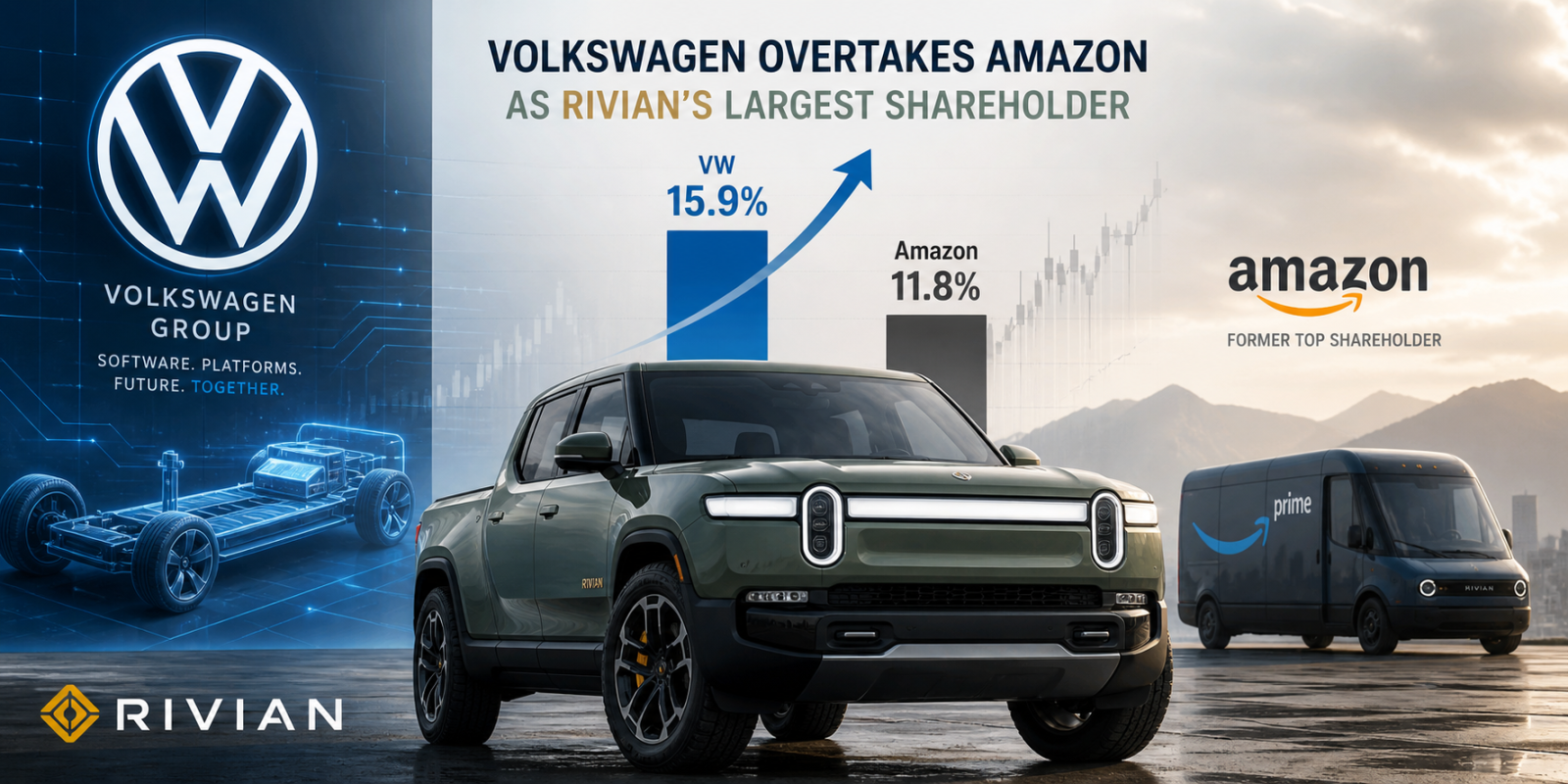
In a surprising turn of events, Volkswagen has officially become the largest shareholder of electric vehicle startup Rivian (NASDAQ: RIVN), overtaking Amazon for the first time since the company's IPO in 2021. According to a new SEC filing, Volkswagen now holds 209.8 million shares, representing a 15.9% stake in the EV maker. This development marks a significant milestone in the ongoing partnership between the German automotive giant and the American EV innovator.
The Details of the Stake Purchase
The increase in Volkswagen's stake came after its U.S. subsidiary acquired 62.9 million new shares on April 30 at a price of $15.90 per share—a total investment of roughly $1 billion. This transaction was triggered by the successful completion of a testing milestone related to the joint venture between Volkswagen and Rivian, as detailed in the filing. The purchase not only boosted Volkswagen's ownership but also signaled its deep commitment to the collaboration.
The joint venture, which aims to combine Volkswagen's manufacturing expertise with Rivian's innovative electric vehicle technology, has been a key focus for both companies. The recent milestone likely involved progress on shared platforms or software integration, though specific details remain under wraps. This infusion of capital provides Rivian with additional liquidity as it ramps up production of its R1T pickup and R1S SUV, as well as the commercial delivery vans for Amazon.
Impact on Rivian and the EV Market
What This Means for Rivian's Future
Volkswagen's increased stake is more than just a financial move—it represents a strategic vote of confidence in Rivian's long-term potential. With VW now the largest shareholder, the two companies are expected to deepen their collaboration, potentially leading to joint development of electric platforms, battery technologies, and software solutions. For Rivian, having a powerful ally like Volkswagen can accelerate its path to profitability and global expansion.
Moreover, the $1 billion investment will help Rivian weather ongoing market challenges, including supply chain disruptions, rising material costs, and intense competition from Tesla, Ford, and other EV players. The funding may also support Rivian's plans to build its second manufacturing plant in Georgia, which is crucial for scaling production to meet demand.
Amazon's Continued Involvement
While Amazon is no longer the largest shareholder, it remains a significant investor and a key customer. Amazon ordered 100,000 electric delivery vans from Rivian, with the first units already deployed in select U.S. cities. The e-commerce giant's stake, though reduced in relative terms, still holds substantial influence, and its partnership with Rivian for logistics services continues. Amazon's decision not to increase its stake may reflect a strategic pivot, but it does not diminish the ongoing commercial relationship.

The SEC Filing and Investor Implications
The SEC filing revealed that Volkswagen's U.S. arm acquired the shares through a private placement, which allowed Rivian to raise capital without diluting public shareholders significantly. The purchase price of $15.90 was below Rivian's recent trading range, which has seen volatility amid broader market trends and EV industry headwinds. For investors, this move suggests that Volkswagen sees intrinsic value in Rivian at current levels, potentially providing a floor for the stock price.
Analysts have mixed views on the development. Some argue that Volkswagen's deep pockets and global reach will help Rivian overcome operational hurdles, while others caution that joint ventures can be complex to execute. The stock reacted positively in after-hours trading following the news, indicating that the market views the investment favorably.
Conclusion: A New Chapter for Rivian
Volkswagen's ascent to become Rivian's largest shareholder marks a turning point for the startup. The alliance between a traditional automotive powerhouse and an agile EV maker could redefine the competitive landscape. As both companies work together on joint venture milestones, the EV industry will be watching closely for signs of innovation and market share gains.
For Rivian, this partnership offers not only capital but also credibility and access to Volkswagen's vast supply chain and engineering resources. For Volkswagen, it provides a foothold in the premium EV segment and a chance to learn from Rivian's software-defined vehicle approach. The road ahead is uncertain, but with Volkswagen now firmly in the driver's seat as the top shareholder, the journey promises to be eventful.
Disclaimer: This article is for informational purposes only and does not constitute investment advice.
Related Articles
- 7 Survival Strategies for AI Startups in Big Tech’s Shadow
- How IEEE ComSoc's Pitch Sessions Connect Researchers with Industry Innovators
- eyeo Secures €40 Million Series A to Revolutionize Camera Imaging Technology
- 10 Key Insights from Braze’s CTO on Engineering in the Agentic Era
- From Co-founder to AI-First: Inside Braze's Engineering Evolution Under CTO Jon Hyman
- Navigating Observability and Human Intuition in the Age of AI Software Development
- Why Cutting Marketing in a Recession Nearly Killed Our Business—and What We Did Instead to Reach $120M
- Config Secures $27M Seed at $200M+ Valuation to Build Data Infrastructure for Robotics AI, Backed by Samsung Ventures