How to Build a Quantum Processor Powerhouse: The QuantWare Blueprint
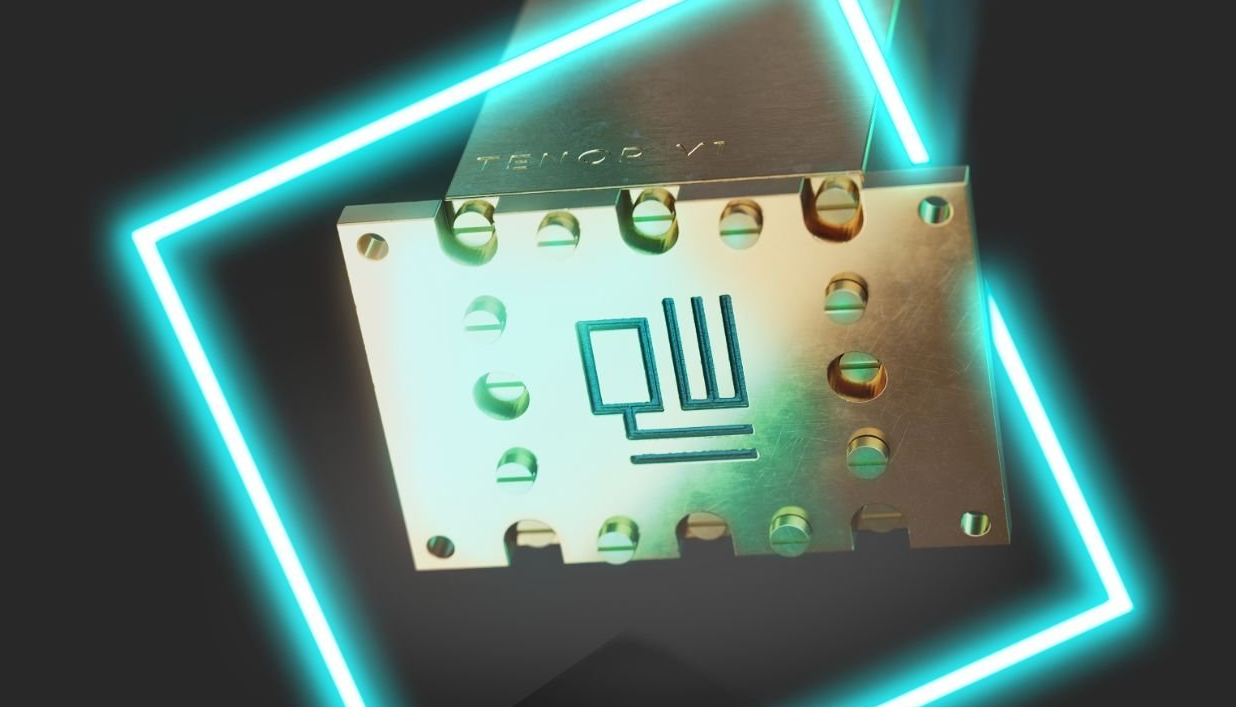
In a bold move that signals a new era for quantum computing, Netherlands-based QuantWare has secured $178 million in funding and unveiled its VIO-40K processor architecture. This ambitious plan aims to create an open architecture for the quantum industry, much like TSMC did for classical semiconductors. If you're looking to replicate such success—or simply understand the roadmap—this guide breaks down the key steps to building a scalable quantum processor ecosystem. From securing capital to designing chips with 10,000 qubits, each phase is critical.
What You Need
- Deep tech funding – At least $100M+ for R&D, fabrication, and talent (QuantWare raised $178M).
- Quantum processor design expertise – Team with backgrounds in superconducting qubits, cryogenics, and chip architecture.
- Open architecture philosophy – Willingness to share designs and enable third-party customization.
- Scalable qubit technology – Proven method to increase qubit count (e.g., 100x improvement to 10,000 qubits).
- Fabrication facilities – Access to cleanrooms and specialized foundries.
- Partnership network – Collaborations with cloud providers, research institutes, and hardware vendors.
Step 1: Secure Strategic Funding for Long-Term Development
The first step is raising substantial capital. QuantWare's $178M round was not just about money—it signaled investor confidence in their vision to become the "TSMC of quantum." Target venture capital firms or government grants that understand the long timelines of quantum hardware. Use the funds to hire top physicists, acquire fabrication equipment, and finance multiple design iterations. Without a multi-year runway, scaling qubits is impossible.
Step 2: Adopt an Open Architecture Model
Unlike proprietary quantum systems, an open architecture allows other companies to build on your design. QuantWare's approach echoes TSMC's foundry model: design chips that can be customized for various use cases (error correction, sensing, optimization). Develop standard interfaces for qubit control and readout. This attracts a community of developers and reduces time-to-market for specialized quantum processors.
Step 3: Develop a Massively Scalable Processor Architecture
This is the core technical step. QuantWare's VIO-40K architecture supports chips with up to 10,000 qubits—a roughly 100x increase over previous designs. To replicate this, you need to:
- Choose a qubit technology (e.g., superconducting transmon) that can be densely packed and reliably coupled.
- Design a processor tile or module that can be repeated to scale qubit count without losing coherence.
- Integrate error mitigation at the architecture level, not just software.
- Optimize wiring and cryogenic control lines to handle thousands of qubits.
Step 4: Focus on Qubit Coherence and Gate Fidelity
High qubit count means little if each qubit decoheres quickly. Invest in materials science and fabrication processes that extend T1 and T2 times. Achieve gate fidelities above 99.9% to reduce error correction overhead. QuantWare's open architecture likely emphasizes standardized error metrics—make sure your roadmap includes a clear path to logical qubits with error correction codes.

Step 5: Build an Ecosystem of Partners and Clients
Becoming the quantum foundry requires customers. Step is to attract cloud providers, startups, and research labs who can use your processors. Offer both physical access (through cloud quantum services) and licensing deals. Leverage your open architecture to allow clients to design custom qubit topologies. For example, a pharmaceutical company might want a specific Hamiltonian simulation architecture.
Step 6: Iterate on Fabrication and Yield
Quantum chip fabrication is notoriously low-yield. Scale your manufacturing by working with existing semiconductor foundries to adapt their processes. QuantWare's $178M will likely go toward dedicated fab lines. Track defect rates and qubit failure patterns; use AI to predict optimal fabrication parameters. Publish your yield data to build trust with partners.
Tips for Success
- Think in generations – Plan for VIO-40K now, but also for 100,000-qubit chips in five years. Moore’s Law for qubits demands constant iteration.
- Embrace modularity – Design each processor as a stack of interchangeable layers (qubit array, control chip, interconnect). This eases upgrades and customization.
- Collaborate on standards – Join consortia like the Quantum Economic Development Consortium (QED-C) to ensure your architecture aligns with emerging industry standards.
- Protect intellectual property – Even with an open architecture, patent your core innovations (e.g., novel qubit coupling schemes) to maintain a competitive edge.
- Communicate your vision – QuantWare's raise was fueled by a compelling narrative. Write white papers, host webinars, and share your roadmap publicly to attract talent and partners.
By following these steps, you can replicate QuantWare's strategy to become a leader in quantum hardware. The road is long, but the $178M injection shows that investors believe the quantum foundry model is the future. Start with a bold vision, secure the funds, engineer an open architecture, and scale qubits by orders of magnitude. The era of quantum computing is just beginning.
Related Articles
- Anthropic in Talks to Acquire Next-Gen AI Chips from UK Startup Fractile Amid Memory Crunch
- Broadcom's VMware Strategy Sparks Mass Customer Exodus to Nutanix
- How to Securely Identify AI Agents and Non-Human Entities with SPIFFE
- Inside Telegram's Media Engine: How to Build a High-Performance Extraction Tool Using MTProto and Async I/O
- Rust 1.97 Drops Support for Pre-Volta GPUs and Older CUDA Drivers – New Baseline Announced
- Top 6 Must-See Tech Deals: Massive Savings on Samsung Galaxy and Amazon Echo Devices
- Rewriting Hardware on the Fly: The Revolutionary FPGA Milestone
- Navigating Utility Rate Cases: Lessons from the CPUC's Rejection of SoCalGas' Hydrogen Pipeline Cost Shift