gThumb 4.0 Alpha Drops with Radical GTK4 Redesign, WEBP and Censor Tools
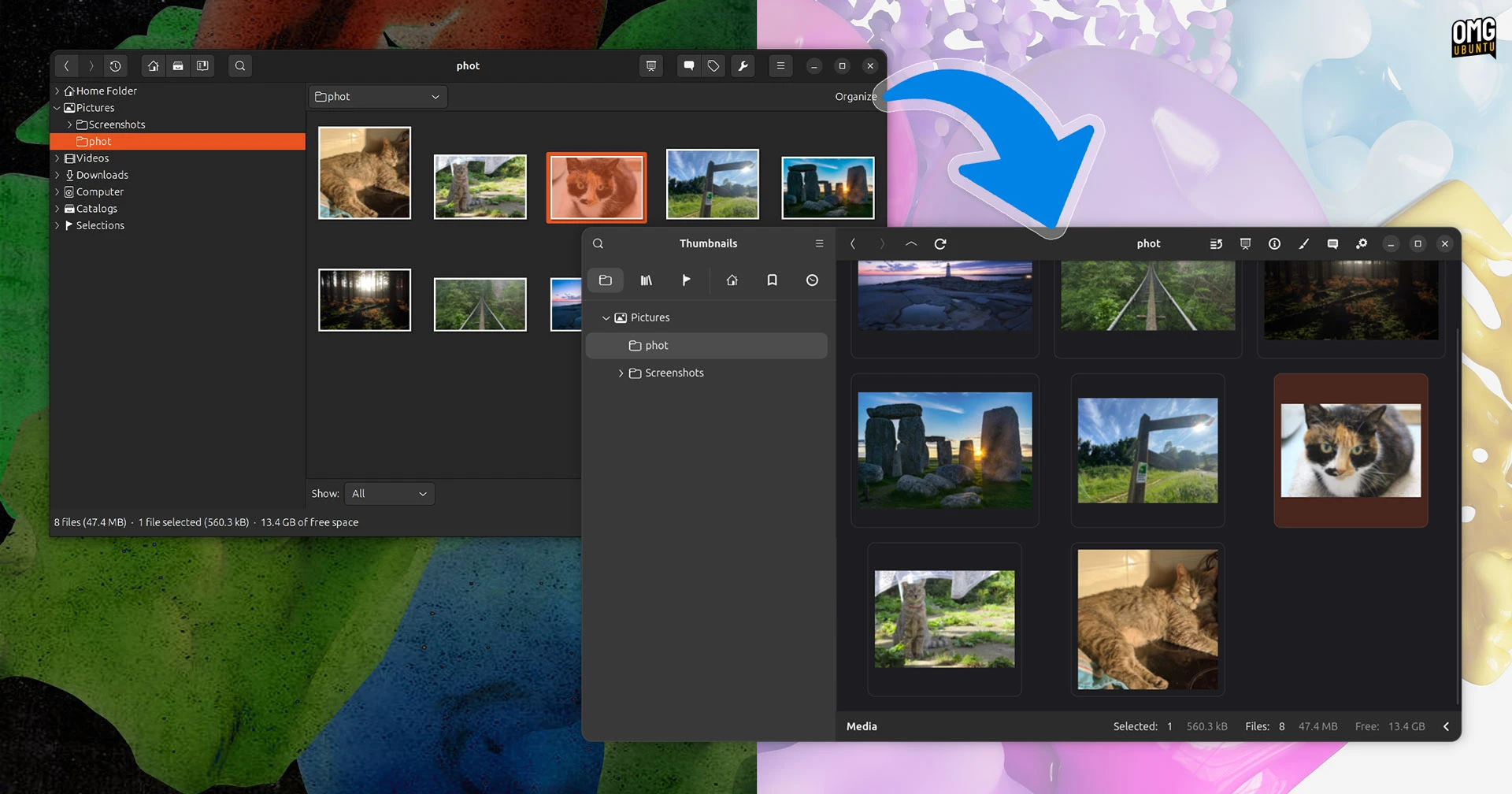
gThumb 4.0 alpha is now available for testing, marking a complete visual and technical overhaul of the open-source image viewer. The application has been rewritten in Vala and fully ported to GTK4 and libadwaita, resulting in an interface that is “barely recognisable” compared to its predecessor.
Lead developer Paolo Vescovi confirmed the dramatic change in a statement: “This isn’t just a facelift—it’s a ground-up rebuild. GTK4 and libadwaita give us the tools to modernise every aspect of how users interact with their images.”
Alongside the visual redesign, the alpha introduces support for WEBP and PNG animations, the ability to export images in the JXL format (see background), and a new censor filter that can pixelate or blur out parts of an image.
Background
gThumb has long been the default image viewer on many GNOME-based Linux distributions. Its previous interface, built on GTK3, was functional but increasingly dated.

The move to GTK4/libadwaita aligns gThumb with modern GNOME design principles, offering a more cohesive and adaptive experience. The Vala rewrite also improves performance and maintainability.
Vescovi explained the rationale: “We wanted to future‑proof gThumb. The old codebase was starting to limit what we could do. Vala gives us a cleaner, faster path forward.”
What This Means
For end users, the most immediate impact is the radically refreshed UI. Panes are rearranged, toolbars simplified, and the entire window adapts better to different screen sizes and themes.
Behind the scenes, the new features—WEBP/PNG animation playback, JXL export, and the censor filter—add practical tools for photographers and privacy-conscious users. “The censor filter is something our community requested for years,” Vescovi noted.
This alpha release is experimental. Users can download it from the project’s GitLab page. A stable release is expected later this year, pending feedback and bug fixes.
Developers should also note that existing plugins written for GTK3 will need adaptation. The team plans to publish a migration guide soon.
Related Articles
- Understanding Policy Groups: A New Approach to Memory Management in Linux
- Rust-Powered Terminal Rat Cursor Goes Viral: 3D Gaming Meets Command Line
- Reviving GTK2: Devuan Developer's GTK2-ng Project
- Linux Kernel Faces Anonymous Page Mapping Overhaul: COW Context Proposed at 2026 Summit
- Canonical Ships Ubuntu 26.04 LTS 'Resolute Raccoon' Without Xorg Desktop Session
- How to Apply Critical Security Updates on Major Linux Distributions
- Shell PATH Setup Pitfalls Exposed: New Step-by-Step Guide Highlights Common Errors
- Ratty: A Playful GPU-Accelerated Terminal Emulator That Breaks the Mold