Next-Gen Autonomy: Experiencing XPENG P7 Ultra with VLA 2.0
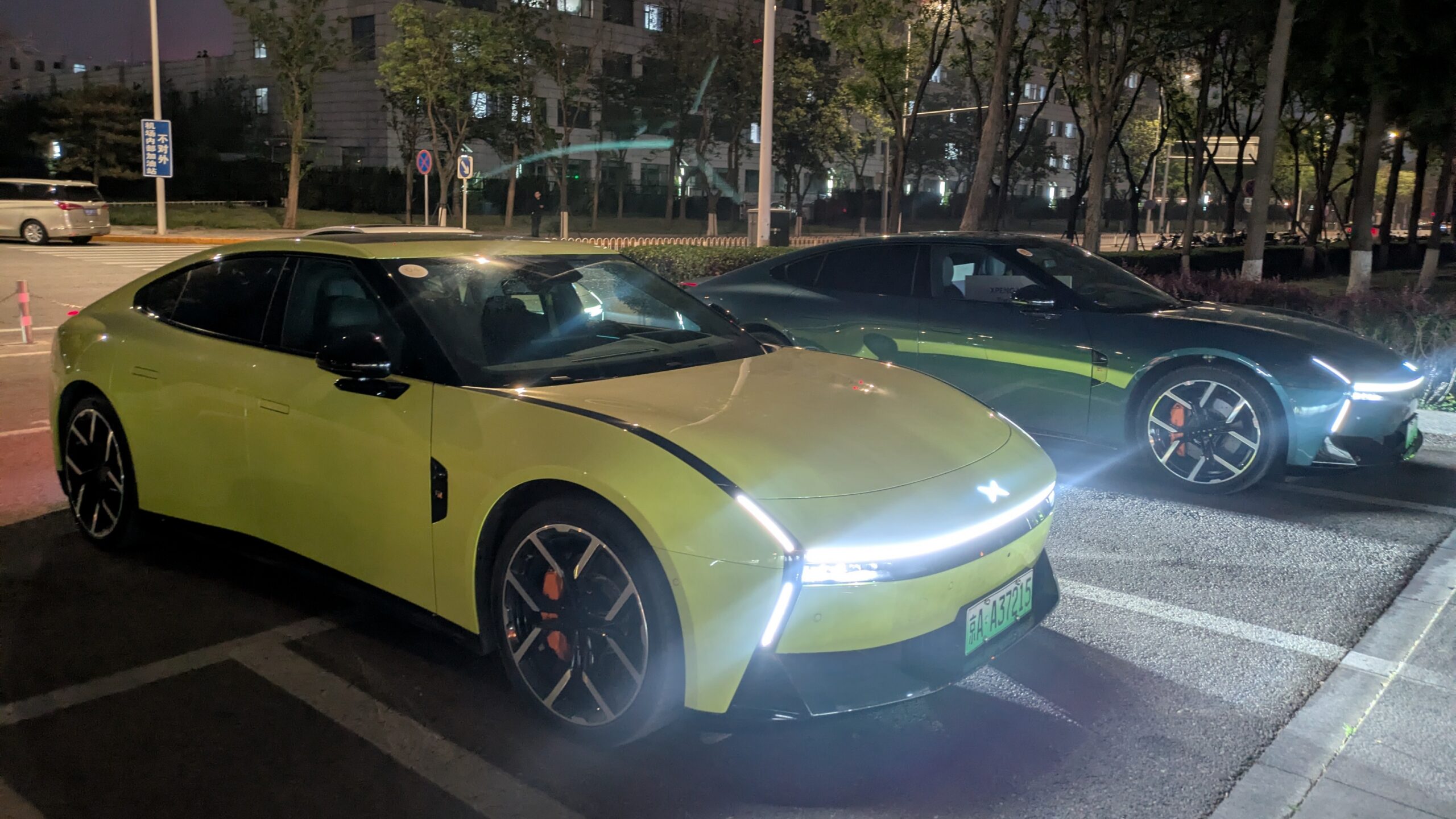
During a recent visit to China, I had the privilege of getting behind the wheel of the XPENG Next P7 Ultra, equipped with the company's latest VLA 2.0 advanced driver-assistance system (ADAS). This experience marked a significant step forward from my earlier encounter with the P7+ in November, which was already quite impressive. It's easy to get caught up in the technology hype, but this drive proved that XPENG is delivering real-world capability.
First Impressions of the P7 Ultra
The XPENG P7 Ultra is a sporty sedan that combines striking design with a focus on autonomous driving. The VLA 2.0 system represents the latest evolution of XPENG's self-driving technology, promising a more confident and natural driving experience.
What Makes VLA 2.0 Different?
VLA stands for "Visual Language Agent"—a system that uses a visual-language model to interpret the road scene and make driving decisions. Unlike traditional ADAS that relies heavily on HD maps and rule-based logic, VLA 2.0 learns from millions of driving scenarios to handle complex urban and highway environments.
- Improved perception: The system uses 11 cameras, 5 radars, and 12 ultrasonic sensors to create a 360-degree view.
- End-to-end learning: An AI model processes sensor data directly to generate control commands, reducing latency and improving smoothness.
- Ongoing updates: Like a smartphone, the car receives over-the-air updates that continuously enhance performance.
Behind the Wheel: Autonomous Confidence
On the roads of Guangzhou, I tested VLA 2.0 in both highway and city traffic. The system handled lane changes, intersections, and pedestrian interactions with surprising ease. What stood out was how natural the behavior felt—acceleration was gentle, steering inputs were smooth, and the car maintained a safe distance without being overly cautious.
City Driving (details)
In congested urban areas, the P7 Ultra navigated roundabouts and unprotected left turns without driver intervention. The system paused for jaywalkers and even recognized temporary traffic cones—a sign of robust object detection. For a first-generation system in China's chaotic cities, this was impressive.
Highway Cruising (details)
On the highway, VLA 2.0 performed confident lane changes and maintained a smooth speed. It also responded well to merging traffic from ramps. The system's ability to read road signs and adjust speed automatically added to the relaxed driving experience.
The Sporty Character of the P7 Ultra
Beyond its autonomous chops, the P7 Ultra is a driver's car. The dual-motor all-wheel-drive variant delivers 0-100 km/h in around 4 seconds. The chassis is taut, the steering is precise, and there’s a selectable driving mode to sharpen responses. It’s a car that encourages you to take the wheel—even though the technology can do it for you.
Ride Comfort
The adaptive suspension absorbs bumps well, making it suitable for daily use. In Sport mode, the dampers stiffen up for better body control. It’s a well-rounded package that doesn't sacrifice comfort for performance.
How VLA 2.0 Compares to the Previous System
In November, I tested the earlier VLA version on the P7+. That system was already a strong performer, but VLA 2.0 feels more mature:
- Faster decision-making: The new system reacts more quickly to sudden obstacles.
- Fewer disengagements: I had to take over only once during a 30-minute city loop, compared to several times before.
- Better map-free operation: VLA 2.0 relies less on HD maps, expanding the operational design domain.
Clearly, XPENG is iterating rapidly—a good sign for future owners.
Conclusion: A Glimpse into Tomorrow’s Driving
The XPENG P7 Ultra with VLA 2.0 represents a compelling blend of sporty driving dynamics and advanced autonomous capability. While still not perfect—it can be hesitant in extremely tight spots—the system has progressed remarkably. For anyone visiting China, experiencing this car is a window into how AI-powered driving is evolving.
As XPENG continues to roll out updates, the gap between human and machine driving narrows. The P7 Ultra isn't just a sedan; it's a statement that autonomous driving can be both confident and fun.
Related Articles
- Massive Battery Farms Shatter Charging Records Amid Calm Market Conditions
- Understanding the BLM Public Lands Rule: Its Rescission and How to Protect California's Public Lands
- Volkswagen Opens Orders for ID. Polo at $40,000; Affordable $29,000 Variant Promised Soon
- Solar Set to Become World’s Top Power Source by 2032, But Battery Storage Steals the Spotlight
- How Coal Emissions Diminish Solar Energy Output: A Technical Guide
- Mastering React Native 0.85: A Guide to the New Animation Backend and Key Updates
- Australian Solar Firm Signs Landmark Pact to Power Entire Small Island Nation Without Diesel
- Navigating the Next Energy Crisis: A Step-by-Step Guide to Learning from the 1970s Oil Shocks for a Hormuz Blockade