10 Ways Facebook Groups Search Is Revolutionizing Community Knowledge Discovery
Facebook Groups have become a hub for shared knowledge, but finding the right information has always been a challenge. Traditional keyword searches often miss the mark, leaving users frustrated. Now, Facebook has fundamentally transformed Groups Search with a hybrid retrieval architecture and automated model-based evaluation. This article breaks down the ten key innovations that make it easier to discover, consume, and validate community content. From understanding the old friction points to seeing real-world examples, you'll learn how this overhaul unlocks the power of community knowledge.
1. Moving Beyond Keyword Matching
Old search systems relied on exact word matches, creating a gap between user intent and available content. For instance, searching for “small individual cakes with frosting” would miss a post about “cupcakes.” The new architecture understands semantic meaning, not just literal strings. This shift from lexical to semantic retrieval is the cornerstone of the upgrade. It allows the search engine to grasp context and synonyms, so you find what you're actually looking for even when the words don't align perfectly.

2. The Hybrid Retrieval Architecture
Facebook now uses a hybrid model that combines keyword-based (lexical) with dense vector (semantic) retrieval. This dual approach ensures both exact matches and concept-based matches are considered. When you search for “Italian coffee drink,” the system can return posts about “cappuccino” even if the word “coffee” never appears. This hybrid design dramatically improves recall and precision, making community wisdom more accessible than ever before.
3. Automated Model-Based Evaluation
To ensure changes actually improve user experience, Facebook implemented automated model-based evaluation. Instead of relying solely on manual testing, algorithms now assess search quality continuously. This allows rapid iteration and validation of new retrieval methods without sacrificing stability. The result is a search that gets better over time, with no increase in error rates according to internal metrics.
4. Solving the Discovery Friction Point
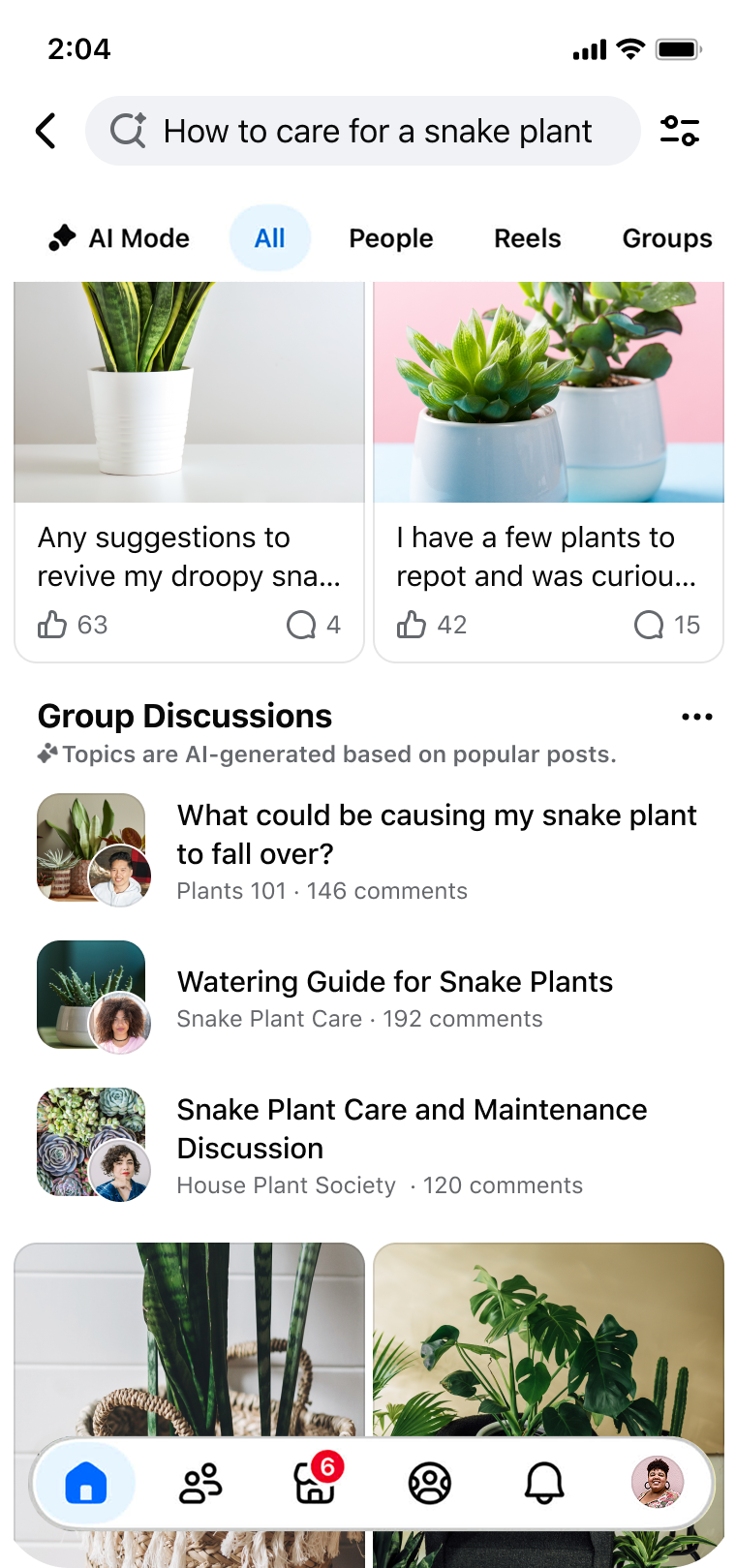
Discovery was the first major pain point. Users often describe a concept in natural language, but the content uses different phrasing. The new system bridges this gap by understanding intent. For example, a search for “tips for taking care of snake plants” will surface posts that discuss watering schedules, light requirements, and common issues, even if those exact words aren't used. This semantic matching transforms discovery from a guessing game into a reliable process.
5. Reducing Consumption Effort
Even when users find relevant posts, they previously faced an “effort tax” of scrolling through hundreds of comments to find a consensus. The updated search prioritizes high-quality, actionable snippets. By ranking comments and post summaries based on relevance and community engagement, users can now quickly grasp the key information without exhaustive reading. This reduces the cognitive load and time spent per search.
6. Validating Decisions with Community Expertise
Validation is critical for purchase decisions. Imagine a shopper on Facebook Marketplace eyeing a vintage Corvette. They want trusted opinions from car enthusiast groups, but that wisdom was scattered across threads. The new search aggregates such advice effectively, presenting it in a digestible format. This helps users make informed decisions by surfacing authentic community expertise, whether it's about cars, recipes, or home repairs.
7. Real-World Example: “Small Individual Cakes”
Consider the earlier example: searching for “small individual cakes with frosting.” In the old system, if the group used the word “cupcakes,” the search returned zero results. With the hybrid architecture, the query is semantically mapped to “cupcake,” and relevant threads appear instantly. This demonstrates how the system breaks down language barriers and connects users with precise answers they would have missed before.
8. Real-World Example: Snake Plant Care
A user searching for snake plant watering advice previously had to sift through dozens of comments. Now, top-voted tips and frequently mentioned schedules rise to the top. The search might highlight a comment like “Water every 2-3 weeks, letting soil dry completely” because it's both relevant and endorsed by the community. This not only saves time but also provides trustworthy guidance derived from collective experience.
9. Real-World Example: Vintage Corvette Purchase
When considering a high-value purchase like a vintage Corvette on Marketplace, buyers need rapid access to group discussions about common issues, prices, and modifications. The new search compiles relevant threads and comments from multiple groups into a coherent summary. This allows the buyer to validate the listing quickly and confidently, leveraging the community's collective knowledge without manual digging.
10. Tangible Improvements in Engagement and Relevance
Since deployment, Facebook reports measurable gains in search engagement and relevance without increasing error rates. Users find what they need faster, stay longer, and interact more with content. The hybrid architecture and automated evaluation ensure continuous refinement. This sets a new standard for community search, proving that AI-driven semantic understanding can transform how we tap into shared knowledge.
In conclusion, Facebook Groups Search overhaul addresses three critical friction points—discovery, consumption, and validation—through a hybrid retrieval architecture and automated evaluation. By moving beyond literal keywords to grasp user intent, the new system unlocks the true power of community knowledge. Whether you're looking for recipes, car advice, or plant care tips, the search now speaks your language. These ten innovations represent a significant leap forward in making online communities more helpful and connected.
Related Articles
- How to Revamp Group Search for Community Knowledge
- How to Choose Award-Winning Bourbon on a Budget: A Step-by-Step Guide
- Revolutionizing Facebook Groups Search: How AI Unlocks Community Knowledge
- Seamlessly Combine Packages from Different Linux Distributions with Distrobox
- 10 Lessons from Vienna’s Intellectual Circle for Designing Amiable Online Communities
- Massive Phishing Campaign Exploits Legitimate RMM Tools to Breach 80+ Organizations
- Securing Your CI/CD Pipeline Against Malicious Ruby Gems and Go Modules: A Step-by-Step Defense Guide
- How to Craft a Historically Accurate Drama That Captivates Audiences