Exploring the Arbot Panorama: Perseverance's Geological Treasure Trove
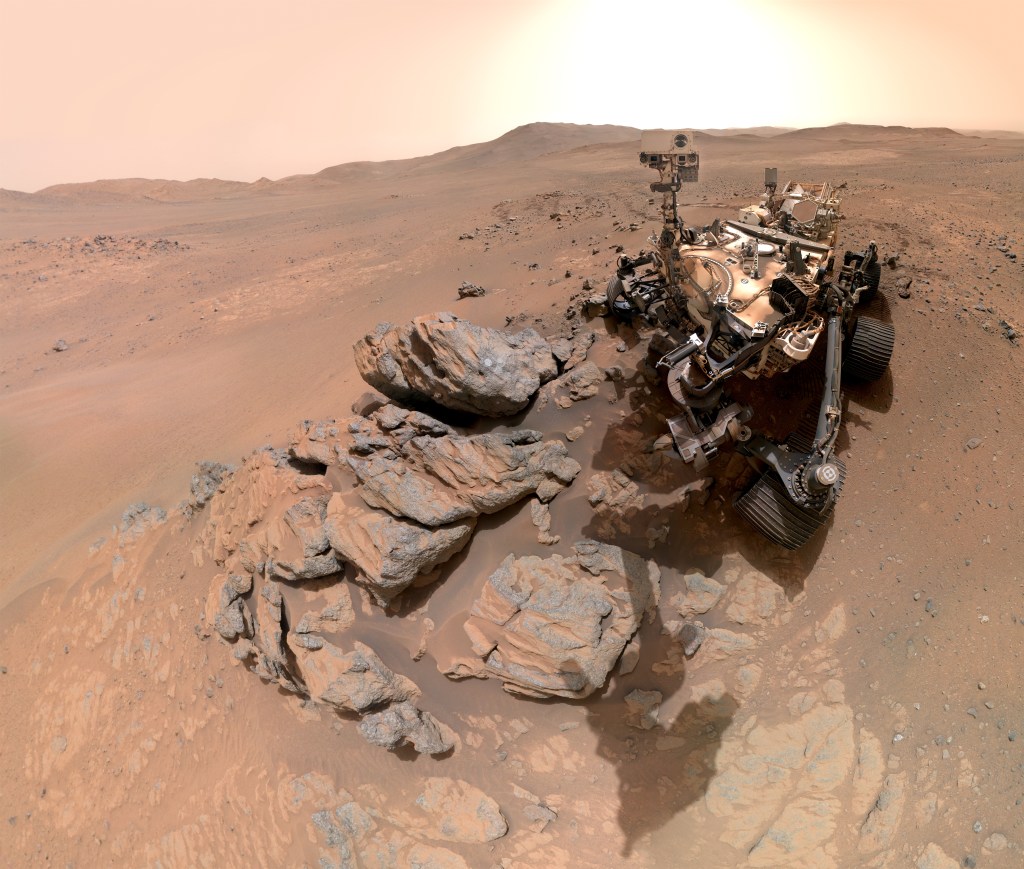
NASA's Perseverance rover has delivered a stunning new panorama from its journey on Mars, capturing a diverse and windswept landscape at a location nicknamed 'Arbot.' This mosaic, assembled from 46 individual images taken on April 5, 2026 (Sol 1882), offers one of the richest geological vistas of the mission. The enhanced-color version accentuates subtle differences in rock textures, providing scientists with invaluable data about the Martian environment as the rover pushes west beyond Jezero Crater. Below, we answer key questions about this remarkable image and what it reveals about the Red Planet.
What is the Arbot panorama and why is it significant?
The Arbot panorama is a mosaic created from 46 images captured by Perseverance's Mastcam-Z camera on April 5, 2026. It shows a windswept area with diverse rock textures and colors, representing one of the mission's most geologically rich views. The panorama is significant because it documents the rover's deepest westward push beyond Jezero Crater, offering a new perspective on Mars' geological history. The enhanced-color version improves visual contrast, making subtle color differences visible that could indicate various mineral compositions. This helps scientists understand past environmental conditions, such as water activity or volcanic processes. The natural-color version (Figure A) provides a true-to-eye view, while a 3D anaglyph (Figure B) uses 92 images to give depth perception for detailed terrain analysis.

When and where was the panorama taken?
The panorama was acquired on April 5, 2026, which corresponds to the 1,882nd Martian day (sol) of the Perseverance mission. The location is an area informally named 'Arbot,' situated west of Jezero Crater. This marks the rover's farthest westward traverse from its landing site, as it explores increasingly ancient terrain. The name 'Arbot' is a working designation used by the science team to refer to the specific outcrop and surrounding landscape. The coordinates are not publicly specified in the original text, but the area lies within the broader region NASA's team has been investigating for signs of past habitable environments.
How was the panorama created?
The panorama was assembled from 46 individual images taken by Perseverance's Mastcam-Z instrument, a sophisticated camera system that can zoom and change focus. The images were captured in multiple color bands and then stitched together to form a seamless mosaic. An enhanced-color version was processed to increase visual contrast and accentuate color differences, helping geologists identify distinct rock units. Figure A is a natural-color version that presents the scene as the human eye would see it on Mars. Figure B is a 3D anaglyph composed of 92 images, designed to be viewed with red-blue glasses. This stereo effect allows scientists to gauge topography and rock shapes more accurately. The instrument's calibration ensures precise color representation, crucial for mineral identification.
What does the panorama reveal about the Martian landscape?
The Arbot panorama showcases a diverse, windswept terrain with varying rock textures and colors. The enhanced-color version highlights geological features such as layered outcrops, scattered boulders, and fine-grained materials that may have been shaped by ancient water or wind erosion. Darker and lighter rock types are present, suggesting different origins—some possibly volcanic, others sedimentary. The landscape lacks the abundant sand dunes seen elsewhere, indicating that wind has removed loose particles or that the surface is relatively cohesive. This variety is critical for selecting future sampling targets, as each rock type could preserve clues about Mars' past climate and potential for life.
Who built and operates the Perseverance rover and its camera?
NASA's Jet Propulsion Laboratory (JPL), managed for the agency by Caltech in Pasadena, California, built and manages operations of the Perseverance rover. The Mastcam-Z instrument is led by Arizona State University (ASU), working in collaboration with Malin Space Science Systems (MSSS) in San Diego for the design, fabrication, testing, and operation of the cameras. Additionally, the Niels Bohr Institute at the University of Copenhagen contributed to the design, fabrication, and testing of the calibration targets that ensure accurate color and focus across images. This partnership reflects the international and interdisciplinary nature of Mars exploration.
What are the different versions of the panorama available?
Three versions of the Arbot panorama are available. The primary version is an enhanced-color mosaic (PNG, 132.21 MB) with processed color bands for improved contrast. Figure A is a natural-color version (PNG, 117.68 MB) that shows the scene without enhancement. Figure B is a 3D anaglyph (PNG, 67.84 MB) consisting of 92 images, requiring red-blue glasses to view the depth effect. The enhanced-color version is particularly useful for scientists because it amplifies subtle color differences that might indicate mineral variations, while the natural-color version helps with intuitive interpretation. The anaglyph provides topographical context that flat images cannot, aiding in understanding the three-dimensional structure of the landscape.
How does this panorama relate to Perseverance's overall mission?
Perseverance's primary mission is to search for signs of ancient microbial life and collect samples for future return to Earth. The Arbot panorama, captured during the rover's deepest westward push beyond Jezero Crater, provides valuable context for understanding the region's geology. Jezero Crater once held a lake and river delta, but areas like Arbot may contain older rocks that recorded Mars' transition from a wetter to a drier environment. By imaging such diverse terrains, the science team can prioritize where to take samples. The panorama also helps plan the rover's path as it climbs out of the crater, and the 3D version assists in navigating rugged terrain while avoiding hazards.
Related Articles
- Decoding the Fiery Youth of Galaxies: A Guide to Early Universe Star Formation
- 10 Breakthrough Insights Into Rotated Lithium Niobate Crystals and Quantum Materials
- Automated Failure Diagnosis in Multi-Agent AI Systems: A New Dawn for Debugging
- How the First Letter of RNA Shapes Antiviral Alarms: A vs G
- Alzheimer’s Breakthrough: Blocking a Single Protein Restores Memory in Mice
- Hidden Brain Nutrient Deficit Identified as Potential Driver of Anxiety Disorders
- Inside the 7-Day Fast: How Your Body Reinvents Itself
- The Case for Detailed Climate Data in Corporate Resilience Planning