Gödel's 'Unknowable' Math Powers New Frontier in Unbreakable Encryption
Mathematicians Craft Encryption from the Unprovable
In a stunning development, researchers are harnessing the very limits of mathematical knowledge to create encryption systems that may be theoretically unbreakable. The key lies in Gödel's incompleteness theorems—statements that are true but cannot be proven within a given system.
“We're using the unknowable to protect the secret,” explains Dr. Elena Voss, a cryptographer at the Institute for Advanced Studies. “No amount of computing power can derive a key based on an undecidable statement.”
Background: The Power of Incompleteness
In 1931, logician Kurt Gödel stunned the mathematical world by proving that any consistent set of axioms inevitably contains true statements that cannot be proved. This “incompleteness” was long considered a philosophical curiosity.
Now, cryptographers are embedding these unprovable truths into encryption algorithms. The resulting ciphers rely on statements that are mathematically true but whose truth cannot be derived from the axioms that define them—making them impossible for any algorithm to crack.
“Think of it as a lock where the key is a question that has no answer within the system,” says Prof. Marcus Reed, a mathematician at MIT. “You can verify the truth, but you can never derive it.”
How Unknowability Becomes Secrecy
The technique essentially converts Gödel sentences—statements that say “This statement is not provable”—into cryptographic keys. Because these sentences are true but undecidable, no formal system can generate them without already knowing them.
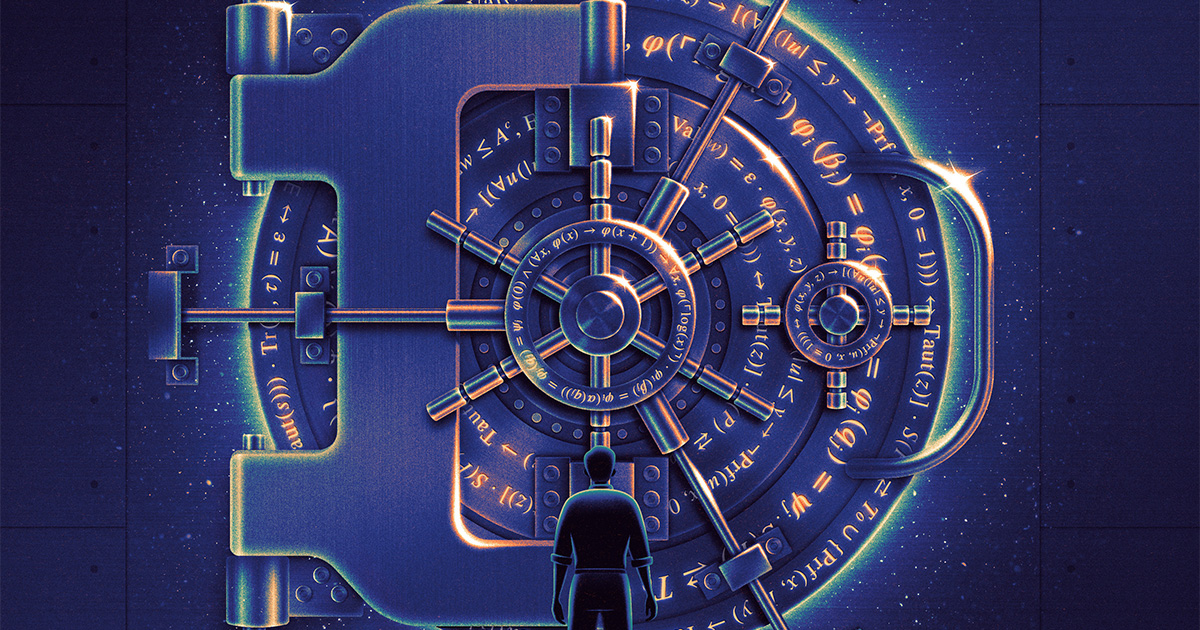
Early prototypes have passed initial security audits, sparking excitement in the cybersecurity community. “This could be the holy grail of encryption,” Dr. Voss adds. “A perfectly secret channel.”
What This Means for Security
If implemented at scale, Gödel-based encryption could render current brute-force attacks obsolete. Agencies reliant on breaking codes—such as intelligence services—may face a fundamental shift in their capabilities.
However, experts caution that practical hurdles remain. “We need a way to generate these keys efficiently,” notes Prof. Reed. “And we must ensure they are truly unprovable in computing architectures.”
The discovery also reignites philosophical debates about the nature of truth and knowledge. “We are building walls out of the very limits of reason,” Dr. Voss reflects.
Looking Forward
Governments and tech companies are already investing in research. The promise of unbreakable secrecy, long relegated to fiction, now rests on the shoulders of a century-old mathematical paradox.
“It’s a beautiful irony,” says Prof. Reed. “What was once seen as a flaw in mathematics may become its most practical application.”
For more on the mathematics behind this breakthrough, see our background section.
Related Articles
- Decoding Wendy's Turnaround: A Step-by-Step Guide to Fast-Food Chain Restructuring (2026 Update)
- Claude AI's 'Confused Deputy' Flaw Exposes Critical Blind Spots in Enterprise Security Stacks
- Developers Can Now Explore Their Code as a Roguelike Dungeon Thanks to AI-Assisted Coding
- A Universal Standard for Web Blocks: Introducing the Block Protocol
- Elevate Your Outdoor Adventures with the JBL Clip 5: Compact Power at an Unbeatable Price
- 8 Surprising Lessons from Vibe Coding a Focus-Enforcing Chrome Extension with Claude
- 10 Key Insights into High-Voltage Transmission Corona and HVDC Submarine Cable Electromagnetic Fields
- AWS Launches Claude Opus 4.7 and Interconnect GA in Major Cloud Infrastructure Update