ChatGPT's New Financial Advisor: Your Questions Answered
OpenAI has introduced a groundbreaking feature that transforms ChatGPT into a personal finance assistant. Through a strategic partnership with Plaid, Pro users in the United States can now link their bank accounts, credit cards, and investment portfolios directly to the chatbot. This integration allows ChatGPT to analyze spending patterns, track subscriptions, assess portfolio risks, and offer tailored budgeting advice—all while keeping account numbers and transaction capabilities strictly off-limits. Below, we break down everything you need to know about this feature, from how it works to what questions it can answer.
1. What exactly is ChatGPT's new personal finance feature?
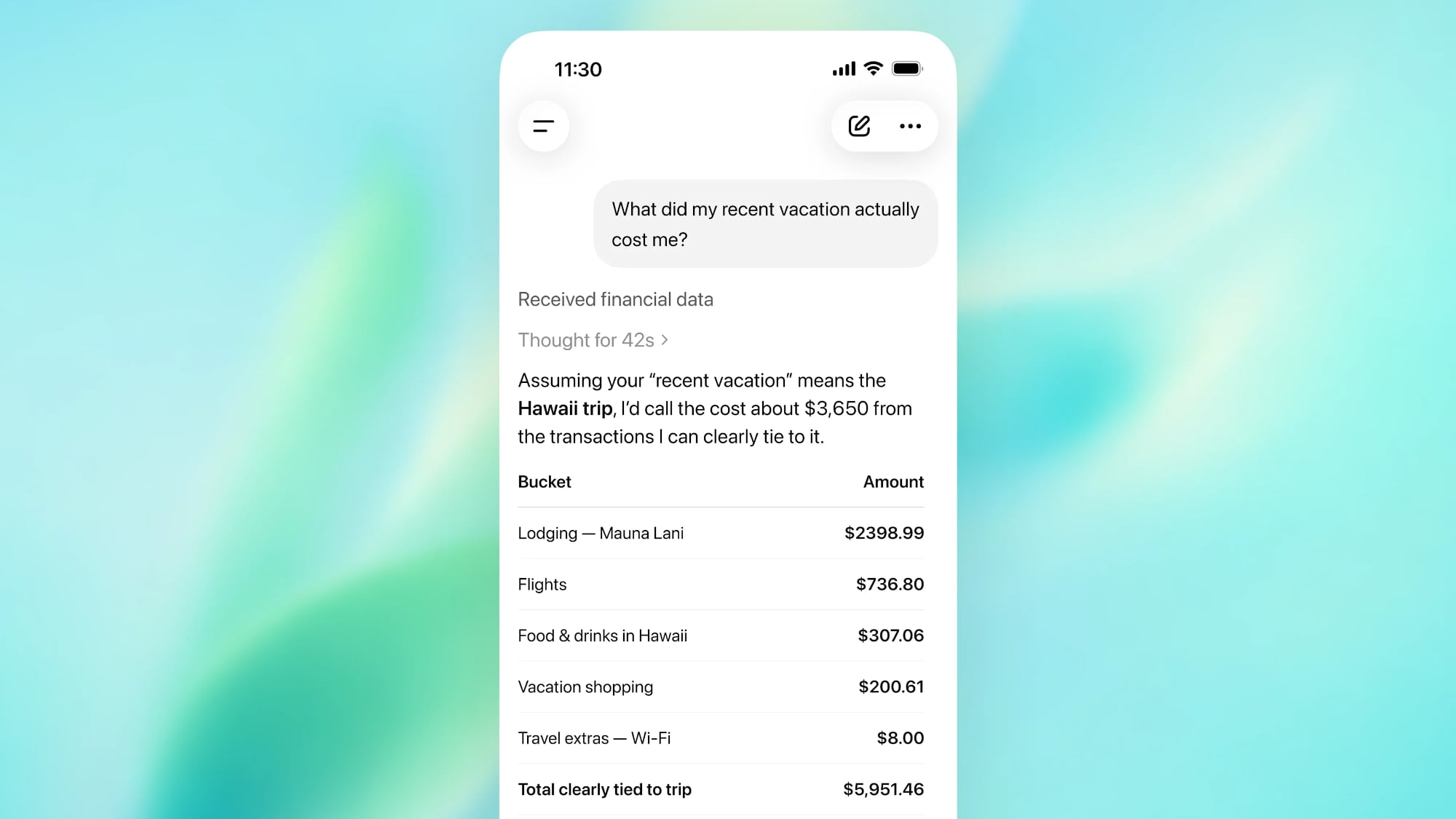
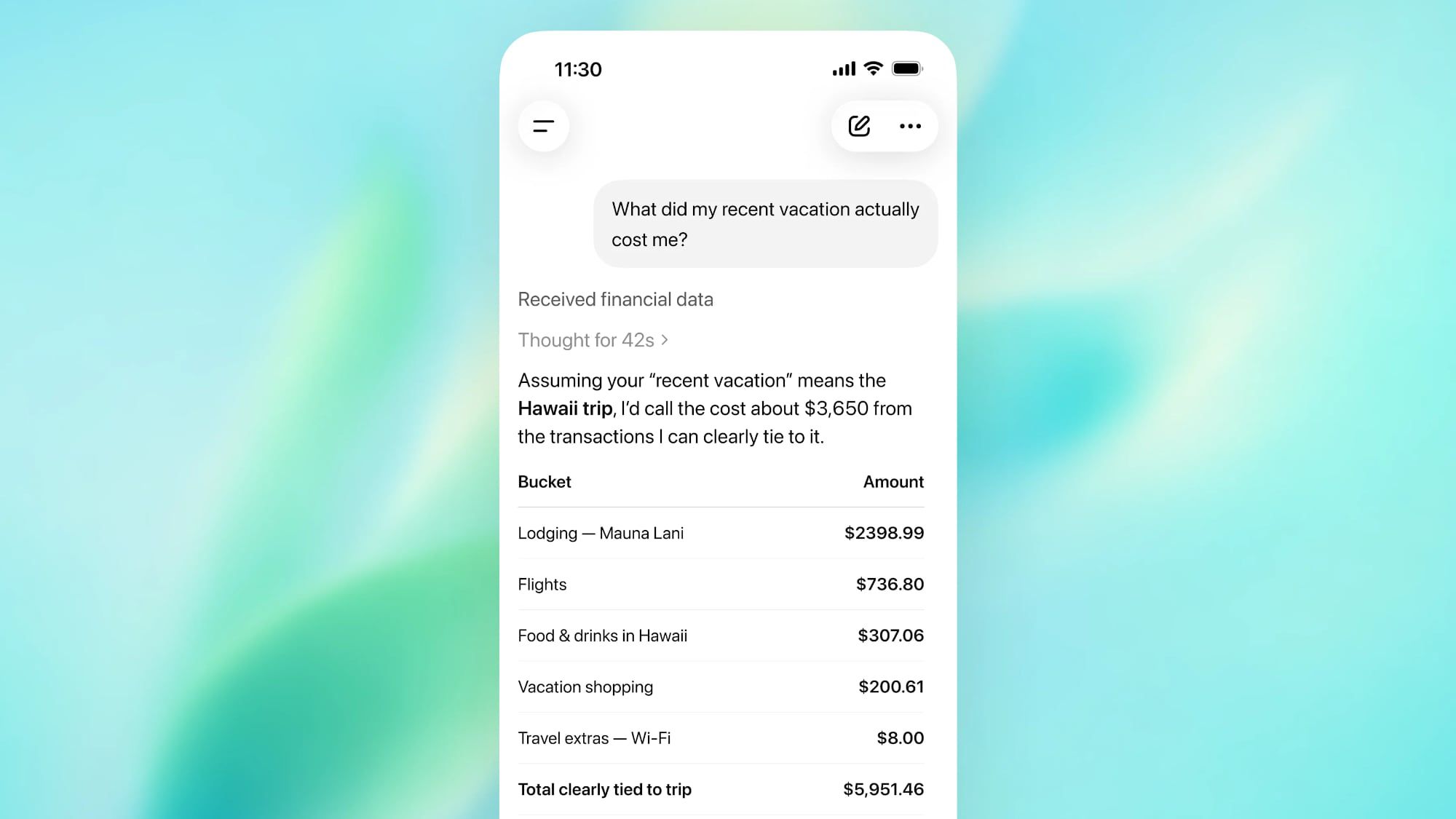
ChatGPT's latest update lets you connect your financial accounts—such as checking, savings, credit cards, and investment accounts—to the AI chatbot. By partnering with Plaid, a leading financial data platform, OpenAI enables ChatGPT to securely access your financial information. Once linked, ChatGPT provides a comprehensive dashboard that shows how you're spending money, your portfolio's performance, active subscriptions, upcoming bills, and more. It goes beyond simple tracking: you can ask complex questions like “What did my recent vacation actually cost?” or “Can I afford to take a lower-paying job for more family time?” and receive personalized, data-driven answers. The feature is designed to give you a holistic view of your finances without requiring manual data entry.
2. How does the Plaid integration work, and is my data safe?
Plaid acts as a secure bridge between your financial institutions and ChatGPT. When you choose to connect an account, Plaid uses encrypted authentication to verify your credentials without exposing your full account numbers. ChatGPT can then read balances, transaction histories, investment holdings, and liabilities—but it cannot see your complete account numbers or make any changes to your accounts (like initiating transfers or payments). OpenAI states that more than 12,000 financial institutions are supported through Plaid. The setup process is straightforward: you log in via Plaid's interface, grant permission, and ChatGPT begins analyzing your data. For now, Plaid is the only integration option, but OpenAI plans to add Intuit (which powers Mint and QuickBooks) soon, expanding the reach of this feature.
3. What kinds of financial questions can ChatGPT answer?
ChatGPT can handle a wide range of personal finance queries, from big-picture planning to granular spending analysis. Some sample questions provided by OpenAI include: “Help me build a plan to buy a house in my area in the next 5 years,” “What did my recent vacation actually cost me?” and “I feel like I've been spending more recently. Has anything changed?” It can also help you evaluate life decisions: “Can I afford to take a lower-paying job if it gives me more flexibility to be home with the kids?” For investors, it can assess risk: “What's the biggest risk in my portfolio?” And for subscription management: “Look at my subscriptions and help me choose what to cancel.” The AI uses your real transaction data to give specific, actionable advice rather than generic tips.
4. What financial data can ChatGPT see, and what is off-limits?
With your permission, ChatGPT gains read-only access to your financial accounts. It can view your current balances, detailed transaction histories (including merchant names, dates, and amounts), investment holdings and performance, outstanding liabilities (like credit card balances or loans), and subscription services. However, OpenAI explicitly states that ChatGPT cannot see your full account numbers—only masked versions are available for reference. More importantly, it cannot initiate any transactions, move money, change account settings, or make payments. This means your money stays safe even if the AI gives flawed advice; the chatbot is purely an analytical tool. OpenAI emphasizes that this limited access is designed to provide personalized guidance without compromising your financial security.
5. Who can access this feature, and on which platforms?
Currently, the personal finance integration is available exclusively to ChatGPT Pro users residing in the United States. Supported platforms include the ChatGPT iOS app and the web interface. Pro subscribers can connect their accounts right away, while ChatGPT Plus subscribers will have to wait—OpenAI intends to roll out the feature to Plus users after refining it based on feedback from Pro customers. The company hasn't announced a specific timeline for Plus availability, but the tiered rollout suggests it could arrive within a few months. Unfortunately, there is no word yet on international expansion or support for Android beyond what iOS offers. If you're a Pro user on a compatible device, you can start linking accounts immediately.
6. What future expansions are planned for this feature?
OpenAI is actively working to broaden the reach of its financial assistant. The next major integration will be with Intuit, the company behind popular finance tools like Mint, TurboTax, and QuickBooks. This will allow users who already have accounts with those services to connect them seamlessly. Additionally, as mentioned, support for ChatGPT Plus subscribers is in the pipeline, though it will only launch after OpenAI has gathered sufficient feedback from Pro users to improve reliability and accuracy. While not officially confirmed, future updates might also include support for more financial institutions via Plaid, additional budgeting categories, and perhaps the ability to export reports. For now, the focus is on getting the core experience right for Pro users in the US.
7. Are there any risks or things to consider before linking accounts?
While the feature is designed with security in mind, there are a few points to consider. First, ChatGPT's advice is based solely on the data it can read—it doesn't replace professional financial advisors for complex tax or estate planning. Second, although Plaid uses strong encryption, sharing any financial data with a third‑party AI comes with inherent privacy risks. OpenAI states they only use your data to answer questions and do not train models on your financial information, but it's wise to review their privacy policy. Third, if you cancel your subscription, your linked accounts will be disconnected, and any stored financial data will be removed. As with any new technology, start with small queries and verify the AI's suggestions against your own knowledge before making major decisions.
Related Articles
- AWS Unveils AI Agents, Desktop App, and OpenAI Partnership in Major 2026 Push
- Why Top 10 AI Tools That Will Transform Your Content Creation in 2025
- 7 Key Battlegrounds in the Enterprise AI Agent Control Plane Race
- How Kiji Privacy Proxy™ Safeguards Corporate Data in the Age of Generative AI
- Building Self-Improving Language Models: A Practical Guide to MIT's SEAL Framework
- How to Build a Self-Improving Language Model: A Step-by-Step Guide Using MIT's SEAL Framework
- 7 Key AI Innovations Coming to Ubuntu in 2026: What Canonical Has Planned
- Exploring Top 10 AI Content Generator & Writer Tools in 2022