Giant 50-Foot Prehistoric Snake Unearthed in India: A Titan Among Serpents
Breaking News: Ancient Snake Discovery in India Rivals World's Largest
Paleontologists in India have uncovered fossilized remains of a colossal prehistoric snake that may be one of the longest ever to have lived. The newly identified species, Vasuki indicus, is estimated to have reached 11 to 15 meters (36–50 feet) in length, rivaling the legendary Titanoboa. The discovery was made in a lignite mine in Gujarat, western India.
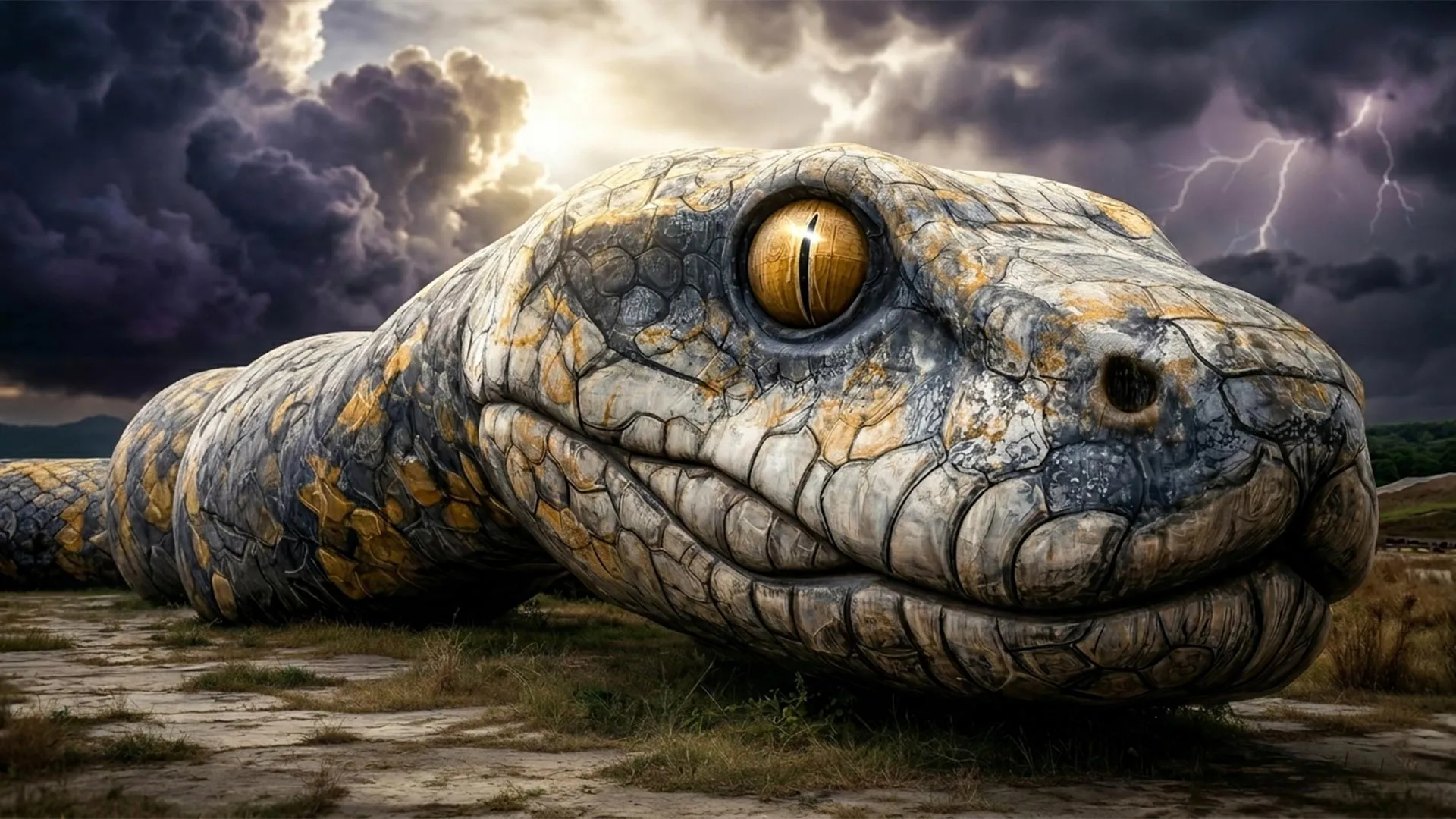
The snake lived approximately 47 million years ago during the Eocene epoch. Its size and build suggest it was a thick-bodied, powerful constrictor, likely hunting by slow, stealthy ambush—similar to modern anacondas. Researchers say the find offers new insights into the evolution of giant snakes and the ancient ecosystems of the Indian subcontinent.
Expert Reactions and New Details
“This is a remarkable specimen that pushes the boundaries of what we know about ancient snake sizes,” said Dr. Rajesh Kumar, lead paleontologist at the Indian Institute of Technology Roorkee, who co-authored the study. “The vertebrae themselves are massive, indicating a snake that could easily overpower large prey.”
The fossils include several well-preserved vertebrae, each up to 6 centimeters wide. By comparing these to modern constrictors and extinct giants like Titanoboa, the team calculated the snake's length and estimated its weight to be around one ton. “It was a true heavyweight champion of the Eocene,” added Dr. Kumar.
Dr. Sarah Thompson, a snake paleontologist from the University of Florida (not involved in the study), commented: “The discovery of Vasuki indicus reinforces that giant snakes evolved multiple times across different continents. India was then an island, so this species adapted to its unique environment.”
Background: From Lignite Mine to Prehistoric Puzzle
The fossils were originally collected in 2005 from the Panandhro mine in Gujarat’s Kutch district. However, they languished unrecognized for nearly two decades. Only recently did scientists reexamine the bones and identify them as belonging to a new genus and species.
The name Vasuki indicus honors the mythological serpent king Vasuki from Hindu tradition, linking the modern discovery to ancient stories. The species epithet indicus refers to India. Researchers believe the snake lived in a lush, tropical floodplain habitat near the coast, where it preyed on crocodiles, turtles, and primitive mammals.
Notably, the mine where the fossils were found also contains remains of early whales and other marine species, indicating a complex ancient environment. The snake’s massive vertebrae suggest it was a slow-moving ambush predator, not a fast-striking hunter.
What This Means for Science and Understanding Evolution
The discovery of Vasuki indicus challenges previous assumptions about the geographic range of giant snakes. Until now, the largest known were from South America (Titanoboa) and Africa (Gigantophis). This Indian giant confirms that such colossi also thrived in Asia.
It also raises questions about the relationship between body size and climate. Warm, stable temperatures during the Eocene allowed reptiles to grow enormous. As Dr. Kumar noted: “These giants were at the top of the food chain. Their size was an adaptation to available prey and environmental conditions.”
More broadly, the find helps fill gaps in the fossil record of Indian subcontinent after the collision with Asia. “It shows that India had a unique fauna before the tectonic collision,” said Dr. Thompson. “We may find even more giants waiting in the sediments.”
For the public, the discovery is a vivid reminder of the incredible diversity of life that once existed—and of how much remains to be unearthed. The full study is published in the journal Scientific Reports.
Related Articles
- Artemis II Crew Celebrates Moon Mission by Ringing Nasdaq Closing Bell
- Moon Lander Race Heats Up: Experts Warn of Risks in Scramble for Lunar Surface
- Samsung Adjusts Production Plans: Galaxy S26 Series Gets a Boost, Mid-Range A Lineup Sees Cuts
- VECT Ransomware's Fatal Flaw: How a Critical Encryption Error Turns It Into a Data Wiper
- Mastering Python Environments in VS Code: Your Guide to the April 2026 Update
- 10 Critical Updates on NASA's Artemis III: What You Need to Know
- 5 Key Reasons I Couldn't Stick with the Galaxy S26 Ultra's Display
- Mars Rover Curiosity Drills at 'Campo Marte' as Psyche Spacecraft Swings By for Gravity Assist