HashiCorp Vault Unveils Native AI Agent Security Framework: Ephemeral, Identity-Based Access Controls Address Autonomous System Risks
Breaking: HashiCorp Vault Introduces Dedicated Security Layer for AI Agents
HashiCorp today announced native support for AI agent authentication and authorization within its Vault platform. The update tackles a critical gap in enterprise security—traditional IAM systems were built for predictable users and workflows, not autonomous, non-deterministic AI agents.
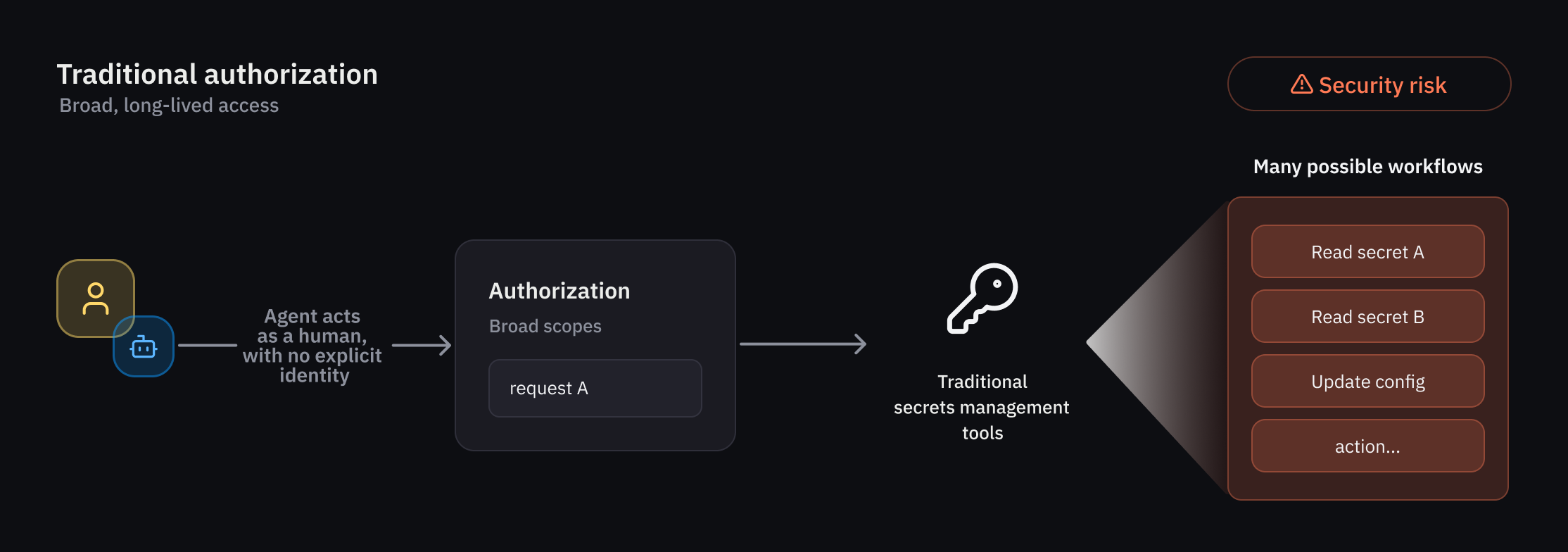
The new capabilities include an agent registry, granular identity-based policies, and per-request ephemeral authorization that expires after a specific task or timeframe. Select customers are already evaluating the features through an early access program, with a broader public beta expected this summer.
Why This Matters Now
“AI agents operate less predictably than humans or traditional non-human identities (NHIs),” said Armon Dadgar, co-founder and CTO of HashiCorp. “They need authorization that is tightly scoped to each request’s transaction context and disappears immediately after use. Existing static access controls are insufficient.”
The move comes as enterprises rapidly deploy AI agents for automation, data retrieval, and workflow orchestration—tasks that require on-the-fly access to sensitive systems and data. Without specialized controls, organizations face heightened risk of privilege escalation, lateral movement, and audit blind spots.
Background: The Authorization Gap for Autonomous Systems
Conventional identity and access management (IAM) assumes deterministic behavior: a user logs in, performs defined actions, and logs out. AI agents, however, operate autonomously, make decisions in real-time, and often act “on behalf of” human users via delegation (the on-behalf-of, or OBO, pattern).
“This is a fundamentally different authorization model,” said Dr. Janine Rivers, a cybersecurity analyst at Gartner. “It must combine identity, delegation, runtime policy evaluation, and ephemeral authorization. Vault’s approach directly addresses all four pillars.”
Enterprises increasingly demand clear attribution for agent actions, fine-grained runtime controls, and a standardized security framework that works across diverse environments—from cloud APIs to on-premises services.
What Vault’s AI Agent Support Includes
- Agent Registry: A new primitive that registers and manages agents separately from human and traditional NHI identities. Enables explicit tracking of delegation flows (OBO) with consent.
- Granular Identity-Based Policies: Deterministic guardrails for non-deterministic agent behavior. Policies enforce least privilege at runtime, scoped to individual actions or workflows.
- Per-Request Ephemeral Authorization: Temporary access rights that expire after a specific task or timeframe, reducing the risk of standing privileges.
- Auditability & Attribution: Every agent action is logged with clear ties to the initiating human user and the agent’s identity.
“These controls let us grant agents precisely the access they need, only when they need it,” said Maria Chen, an early-access customer and security architect at a Fortune 500 firm. “For us, that’s a game-changer in our AI compliance posture.”
What This Means for Enterprise Security
For organizations adopting AI agents—whether for customer support, code generation, or internal process automation—Vault now offers a dedicated framework for registration, authorization, credential management, and observability.
The agent registry ensures that every delegation is explicitly tracked. Policies can be evaluated at runtime, allowing security teams to apply dynamic guardrails that adapt to agent behavior. Ephemeral authorization means that even if an agent is compromised, its access rights vanish after a short, scoped task—limiting blast radius.
“This is a necessary evolution,” Rivers added. “Without agent-native security, AI adoption will stall or introduce unacceptable risk. HashiCorp is setting a precedent.”
Public beta availability is slated for summer 2025. Organizations interested in early access can apply through HashiCorp’s partner network.
Related Articles
- Microsoft Launches Agent Framework 1.0: Autonomous AI Agents Now Production-Ready for .NET Developers
- Redefining AI Engineering: Insights from Hilary Mason on Building Products That Scale
- Microsoft Launches Unified Python Environments Extension for VS Code After Year-Long Preview
- AI Revolution in Filmmaking: Behind the Scenes, Not On Screen – Experts Say Panic Overblown
- 8 Ways AI Coding Tools Are Overwhelming Code Review (And How to Fix It)
- 10 Powerful Ways Dogfooding Transforms JetBrains Developer Tools
- How to Reclaim 4GB of Storage Space from Chrome's Hidden AI Model
- Swift Breaks Into New IDEs: Official Extension Now Available on Open VSX Registry, Enabling Seamless Support for Cursor, VSCodium, and More