Preparing the Roman Space Telescope: A Guide to Ground Support Equipment Arrival at Kennedy Space Center
Overview
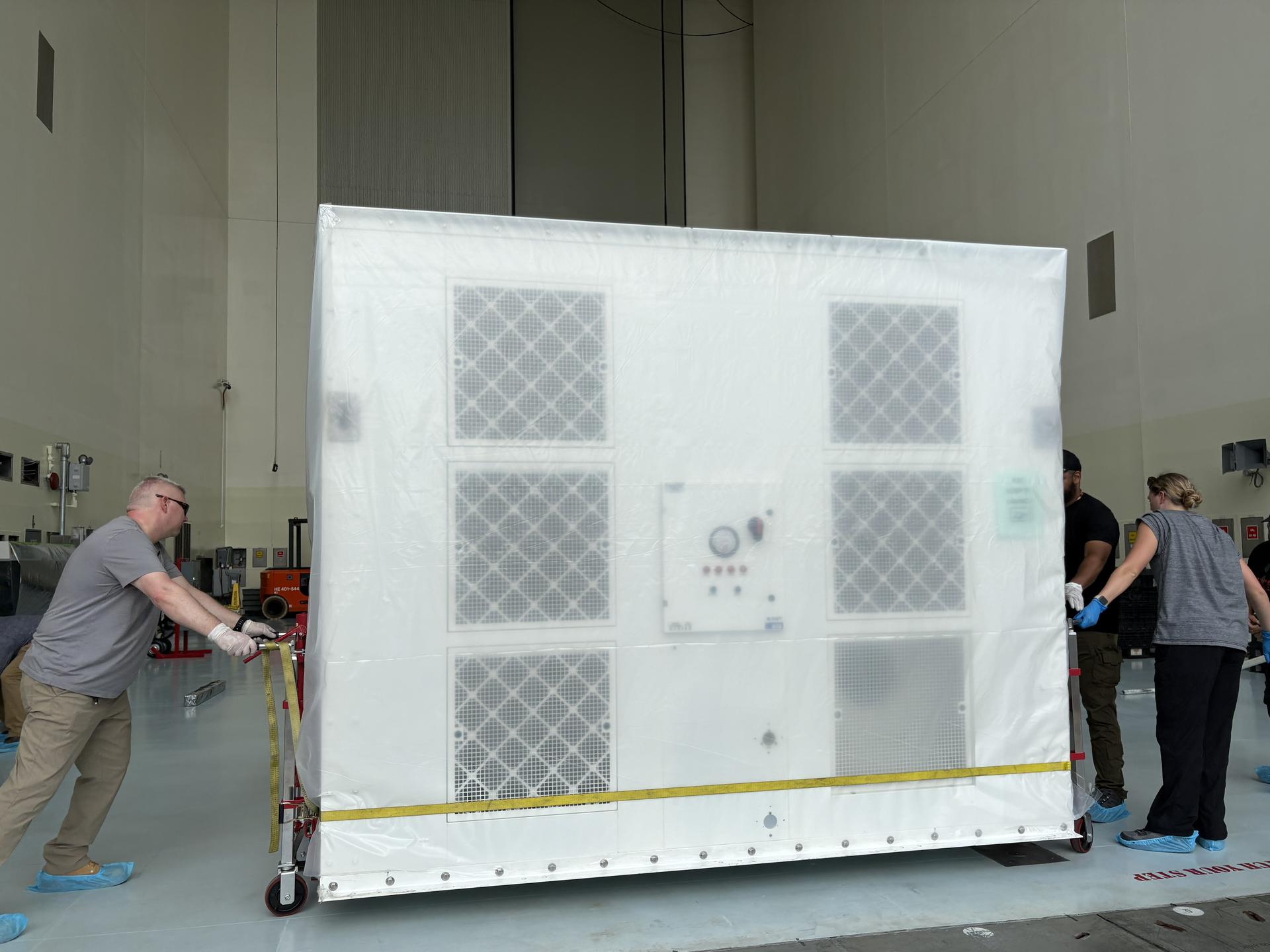
The Nancy Grace Roman Space Telescope, a next-generation observatory designed to unravel cosmic mysteries, recently reached a critical milestone on its journey to launch. In late April, technicians at NASA's Kennedy Space Center in Florida offloaded eight high-efficiency particulate air (HEPA) wall modules at the Payload Hazardous Servicing Facility (PHSF). This ground support equipment will enhance the facility's cleanroom capabilities, ensuring the telescope's stringent contamination controls are met during pre-launch processing. This guide walks through the arrival, installation, and significance of this equipment, providing a detailed look at what goes into preparing a flagship space telescope for its mission.
Prerequisites
Before diving into the step-by-step process, it helps to understand some foundational concepts:
- Cleanrooms and HEPA filtration: Cleanrooms control airborne particles to protect sensitive spacecraft components. HEPA filters remove at least 99.97% of particles ≥0.3 microns.
- Payload Hazardous Servicing Facility (PHSF): A specialized facility at Kennedy Space Center used for processing spacecraft that contain hazardous materials, such as propellants or high-pressure systems.
- Roman Space Telescope mission: An infrared observatory that will survey the universe to study dark energy, exoplanets, and dark matter. It carries the Wide Field Instrument and a Coronagraph Instrument.
- Launch vehicle: SpaceX Falcon Heavy rocket launching from Launch Complex 39A.
- Basic aerospace terminology: Terms like "ground support equipment," "spacecraft fueling," and "launch processing" are used throughout.
Step-by-Step Instructions
1. Arrival and Offloading of HEPA Modules
On April 27, the eight HEPA wall modules arrived at the PHSF. Each module weighs approximately 1,800 pounds (816 kg), making careful handling essential. Here's how the process unfolded:
- Transport: The modules were shipped from the manufacturer to Kennedy Space Center, likely via specialized heavy-haul trucks.
- Inspection: Upon arrival, technicians inspected the modules for any shipping damage, verifying seals and structural integrity.
- Offloading: Using cranes or forklifts rated for the weight, each module was carefully lifted from the transport vehicle and moved into the PHSF cleanroom bay. The offloading took place in a controlled environment to minimize contamination.
- Staging: Modules were temporarily stored on cleanroom-approved stands before installation.
Photo credit: NASA/Leejay Lockhart
2. Integration into PHSF Cleanroom Systems
After offloading, the HEPA modules were integrated into the existing cleanroom infrastructure. This step upgrades the PHSF's air handling to meet the Roman Space Telescope's strict cleanliness requirements:
- Positioning: Each module is mounted onto designated wall sections, forming a bank of HEPA filters that cover large surface areas. The modules are aligned to ensure uniform airflow.
- Sealing: Gaskets and seals between modules and the wall structure are tested to prevent unfiltered air bypass. Technicians use particle counters to verify integrity.
- Electrical and control connections: Power and monitoring cables are attached. Each module includes sensors for pressure drop and flow rate, which feed into the facility's building management system.
- Commissioning: After installation, the entire air handling system is run at design specifications while monitoring particle counts. The goal is to achieve ISO Class 5 or better cleanliness, depending on the PHSF's baseline.
3. Telescope Processing Activities in Enhanced Cleanroom
With the upgraded cleanroom, the Roman Space Telescope can now undergo critical pre-launch tasks:
- Spacecraft fueling: The telescope will be loaded with propellants for its onboard thrusters. This hazardous operation requires a highly controlled environment to prevent ignition sources and contamination.
- Instrument testing: The Wide Field Instrument and Coronagraph Instrument will undergo final functional tests under cleanroom conditions.
- Assembly and integration: The telescope's components will be mated, including its sunshield and communications systems.
Each task is scheduled to ensure the telescope remains within contamination budgets.
4. Launch Campaign Overview
Teams are targeting launch as early as September 2025 aboard a SpaceX Falcon Heavy rocket from Launch Complex 39A at Kennedy Space Center. The launch campaign will include:
- Transport to launch pad: The fully assembled telescope will be moved from PHSF to the payload processing facility near LC-39A.
- Integration with Falcon Heavy: The telescope will be encapsulated in its payload fairing and mounted on the rocket.
- Pre-launch checks: Final electrical and communications tests ensure all systems are go.
- Launch window: A TBD window in early September, refined as the date approaches.
The HEPA upgrades directly support the cleanliness needed during these final steps.
Common Mistakes
Working with heavy, sensitive equipment like HEPA modules and space telescopes can lead to several pitfalls. Avoiding these ensures mission success:
- Improper handling of heavy modules: Crane operators must be certified for lifts exceeding 1,800 lbs. A dropped module could damage the cleanroom floor or itself, leading to delays.
- Contamination during installation: Technicians must wear full bunny suits and use HEPA vacuums. Even a single particle shed from skin or clothing can compromise the cleanroom class.
- Bypassing seals: If gaskets are not properly compressed, unfiltered air enters the cleanroom. Regular leak testing with particle counters is essential.
- Ignoring pressure differentials: The cleanroom must maintain positive pressure relative to adjacent areas. Blocking airflow with equipment can reverse the gradient, pulling contaminants in.
- Scheduling conflicts: Overlapping telescope processing with facility upgrades can introduce dust from construction. Proper sequencing avoids this.
- Underestimating electrical loads: Adding eight HEPA modules increases power demand and heat load. The facility's HVAC and electrical systems must be balanced to avoid failures.
Summary
The arrival of eight HEPA wall modules at the PHSF marks a key step in preparing the Nancy Grace Roman Space Telescope for its mission. Each 1,800-pound module enhances cleanroom systems to meet the telescope's stringent cleanliness requirements, enabling safe fueling and instrument processing. With launch targeted for early September 2025 on a SpaceX Falcon Heavy, the upgraded facility supports the telescope's path to orbit. Avoiding common pitfalls like contamination and handling errors ensures the equipment functions as intended. This guide provided an overview of the arrival, integration, and significance of this ground support equipment—a small but vital piece of the Roman Space Telescope story.
Related Articles
- The Truth About Dying in Space: Debunking Sci-Fi Myths
- How to Audit Your MCP Deployments for the STDIO Command Execution Vulnerability
- 8 Critical Insights into How RNA's First Letter Shapes Antiviral Defenses
- KAME: Sakana AI’s Tandem Speech-to-Speech Architecture Combines Speed and Knowledge
- How to Forge an AI-Powered Space Infrastructure Empire: A Step-by-Step Guide Inspired by SpaceX’s IPO Strategy
- Unlocking Nature's Cancer-Fighting Secret: How Scientists Decoded a Rare Plant Compound
- 'Battlestar Galactica: Scattered Hopes' - A Relentless Roguelite Survival Chase
- Extreme New Ice Phase Pushes Limits of Water's Solid State